Patios, pool decks and outdoor concrete
Outside, sunlight and wet feet change which coating makes sense. Plain epoxy is the wrong choice.
Why epoxy doesn't belong outside
Standard epoxy yellows and chalks in sunlight. Aliphatic coatings, which include polyaspartic and aliphatic polyurethane, hold their color. That is why outdoor systems usually use a polyaspartic topcoat, sometimes over an epoxy base for adhesion.
Wet feet need grit
A glossy coating around a pool or at the bottom of the dock steps can be slick when wet. Ask for aggregate in the topcoat. And skip the high-gloss finish.
Outdoor slabs move and breathe
Outdoor concrete freezes and thaws, bakes in summer, and pulls moisture up from below. Cracks will keep moving. A contractor should look at the slab before promising how long a coating will last on it.
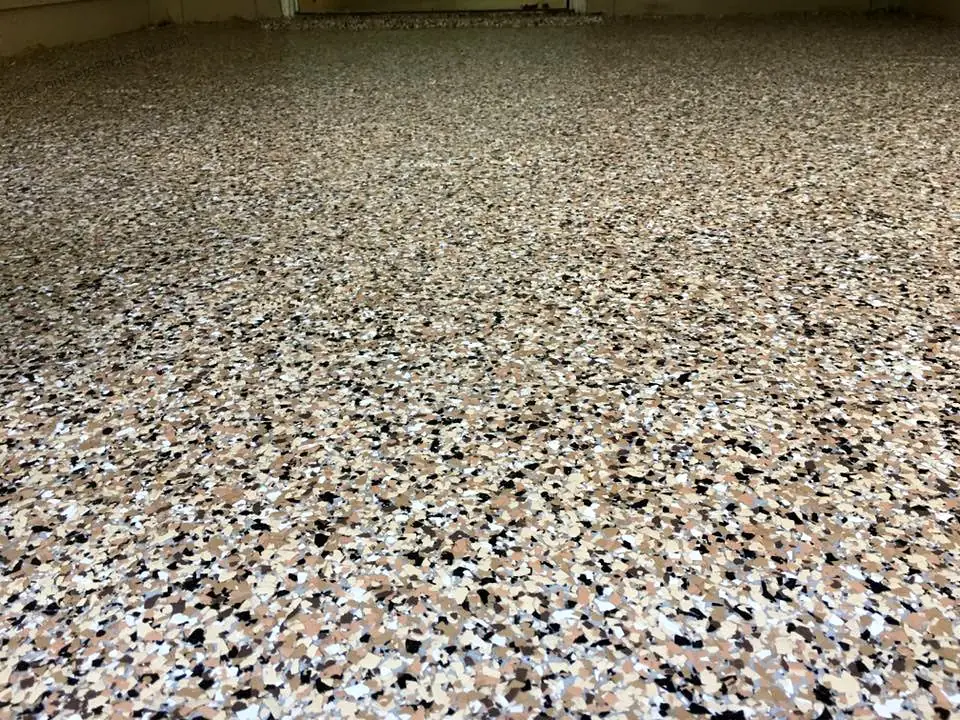
Good fits and poor fits
Usually a good fit: covered patios, pool decks, walkways, screened porches, concrete steps and landings.
Talk it through first: driveways, because tires plus weather are hard on thin coatings and a penetrating sealer is often the better value. Also slabs with active cracking, and concrete that stays wet.
Not covered here: wood, composite or foam dock surfaces.
Get an outdoor concrete estimate
Tell us where the floor is, how you use it and what you have in mind. Start with a few details.
Questions people ask
Can you coat my wood or composite dock?
No. This site covers coatings for concrete. Wood, composite and foam dock surfaces use different products and specialists.
Is a sealer cheaper than a coating?
Usually. Penetrating silane or siloxane sealers soak into the concrete and don't peel, but they don't change the look much and need redoing every several years. Acrylic sealers cost less up front but can peel in freeze-thaw weather.