Commercial floor coatings
The lake economy runs on marinas, restaurants, rental properties and storage buildings. Each one is hard on floors in a different way.
| Space | What the floor faces | Systems commonly used |
|---|---|---|
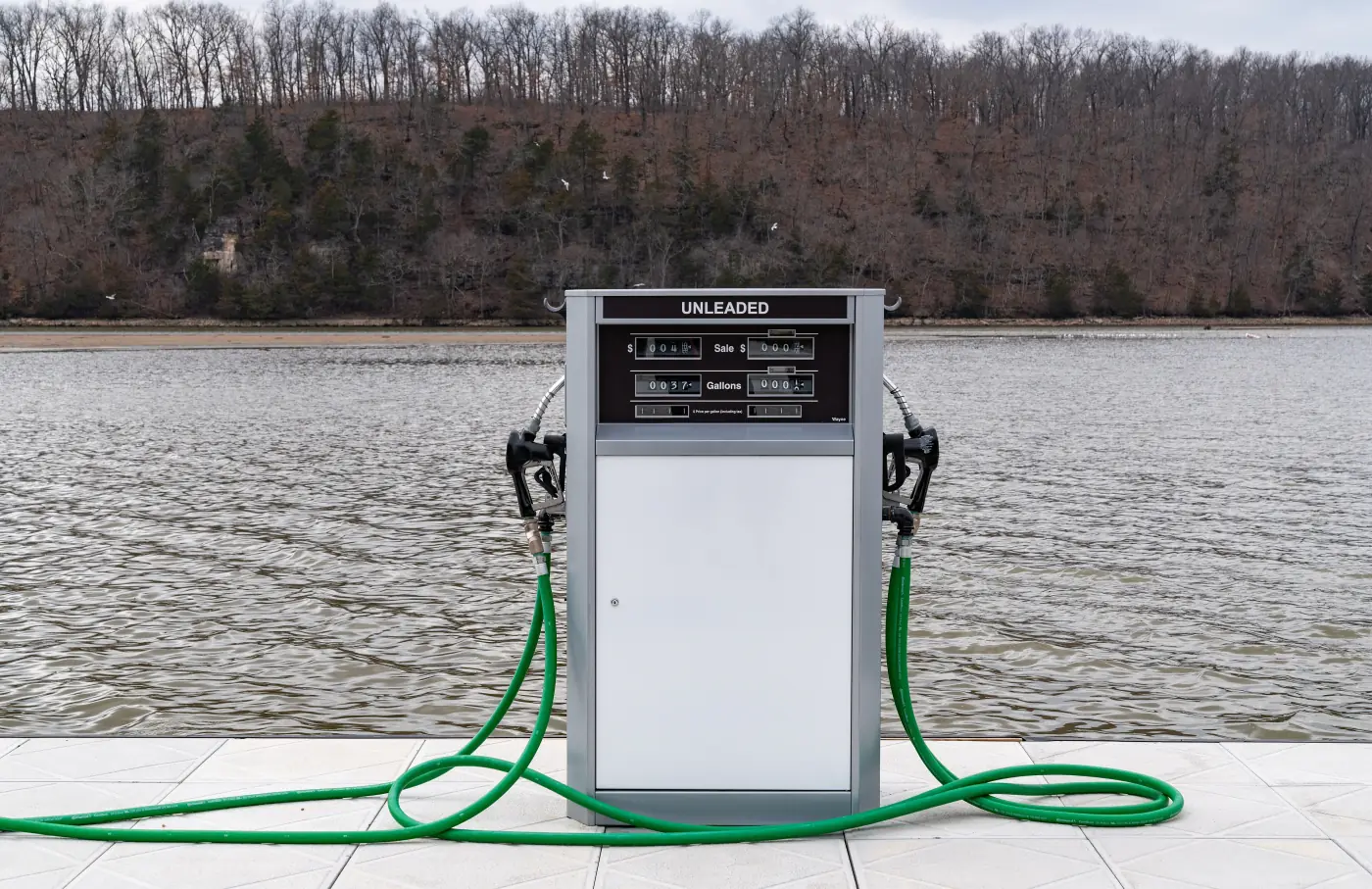
| Marina service shops and boat storage | Fuel, oil, water off hulls, trailer tires | Epoxy or polyaspartic with slip-resistant broadcast |
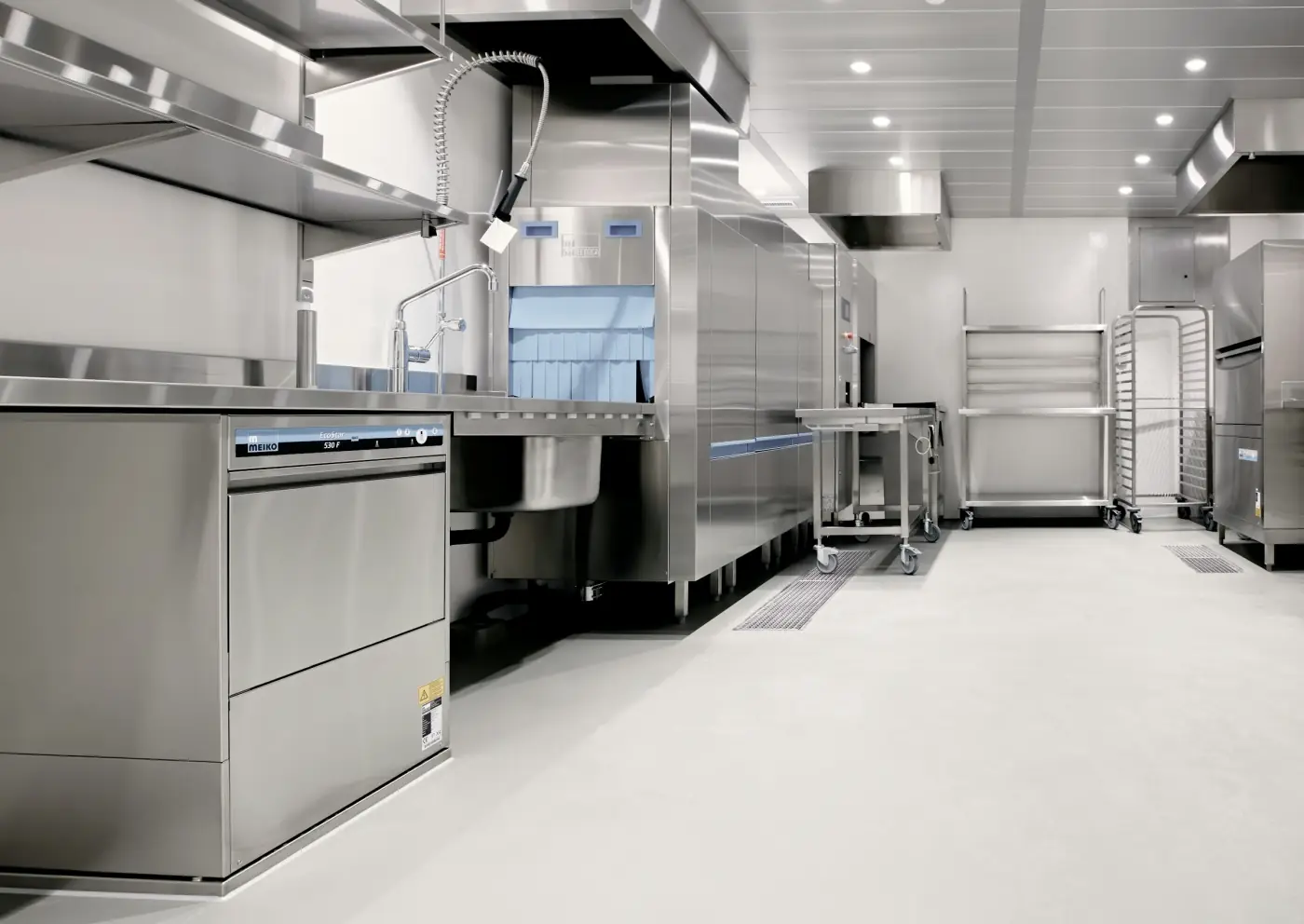
| Restaurant kitchens and breweries | Hot water and steam washdowns, grease, constant wet | Urethane cement, built to handle thermal shock |
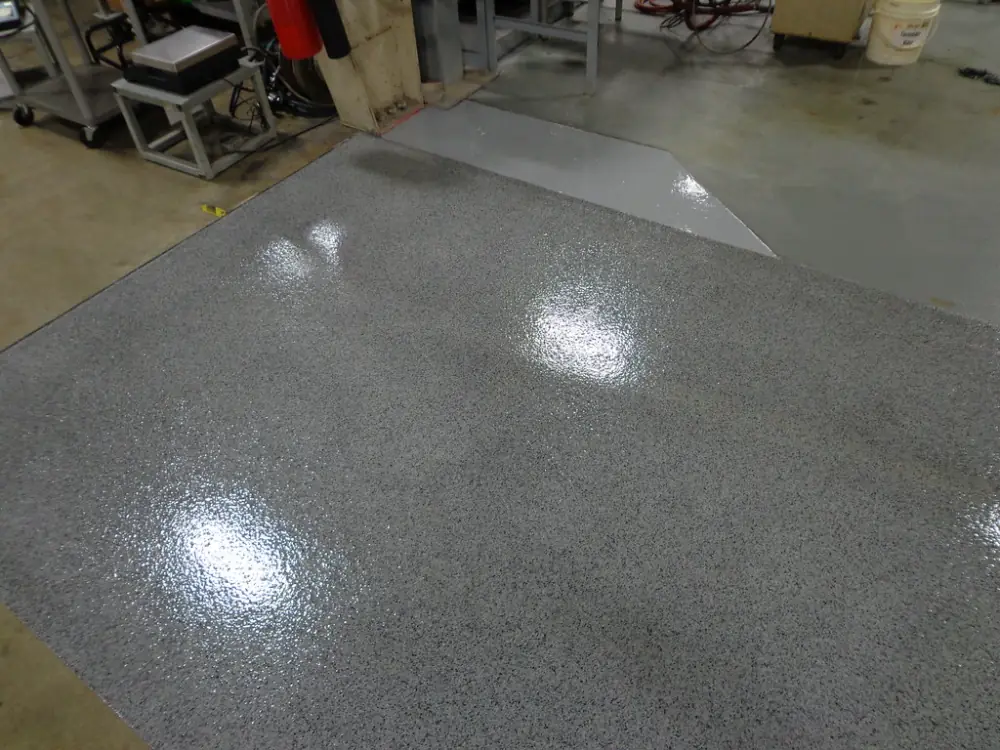
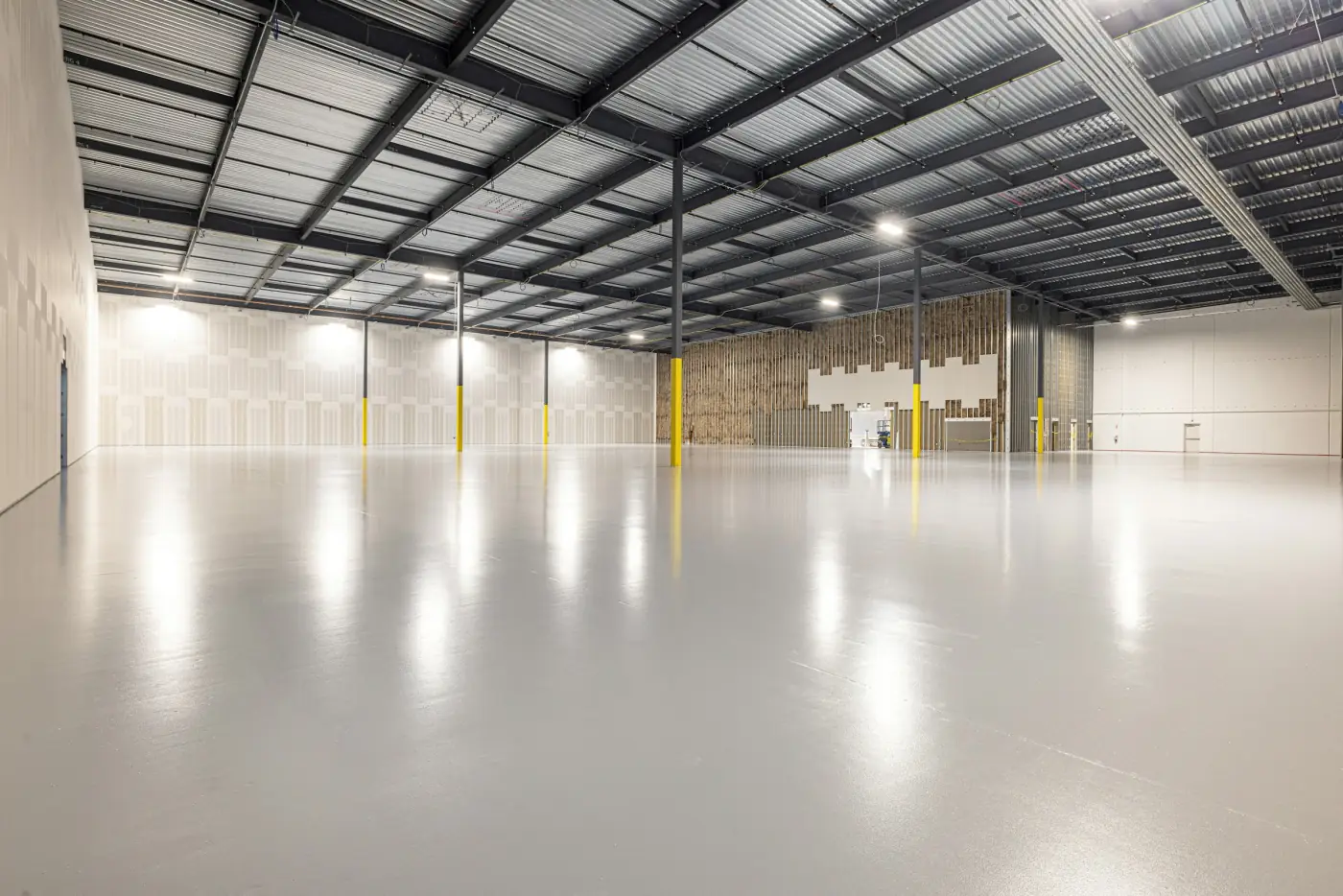
| Warehouses and shops | Forklifts, pallet jacks, dropped loads | 100% solids epoxy, quartz systems, or polished concrete |
| Showrooms and retail | Foot traffic, appearance | Flake or solid epoxy, polished concrete |
| Condo and parking garages | Cars, road salt, water on upper decks | Traffic-bearing membrane systems |
| Vet clinics | Constant cleaning, animals, minimal downtime | Epoxy or fast-cure polyaspartic |
General industry practice from manufacturer and trade sources. The right system depends on the actual floor.
Slip resistance is part of the job
OSHA requires walking surfaces to be kept free of hazards and dry where possible, but it doesn't set a slip number. For wet floors, the ANSI A326.3 test for dynamic coefficient of friction is the common yardstick. Minimums run from 0.42 for level interior floors that get wet to 0.55 for tougher conditions.
Grit matters. Aluminum oxide is hard and keeps its bite. Silica sand costs less, but it wears smoother. Tell the contractor exactly where people walk with wet shoes.
This is general information, not legal advice about your building.
What helps a commercial quote
- Approximate square footage and a rough floor plan
- What's on the floor now: bare, sealed, coated, tile
- What the floor takes: vehicles, chemicals, hot water, wet feet
- When the space can be closed, and for how long
- Whether you need cove base up the walls
Put what you know in the request. The contractor will want to walk the space before pricing it.
Get a commercial estimate
Tell us where the floor is, how you use it and what you have in mind. Start with a few details.
Questions people ask
Can the work be done around business hours?
Often, yes. Fast-curing polyaspartic systems can shorten downtime, and large floors can be done in sections. The contractor will plan around your hours after they see the space.
Do you handle health-department requirements for kitchens?
No. This site doesn't give code or compliance advice. Ask the contractor and your local health department what finish they expect for food areas.
Is polished concrete an option?
For large, dry, indoor spaces like warehouses and retail floors, yes. Polishing grinds and densifies the slab itself instead of adding a coating. It suits some spaces better than others, and a contractor can tell you which.