Basements, shops and barns
Indoor slabs are where epoxy does its best work, if the concrete is dry enough. Here is how to think about lower levels and workshops, and the barns out back.
Lower levels and basements: test first
Concrete lets moisture vapor pass up from the ground. If a coating goes down while too much vapor is coming through, it can blister and let go, sometimes a year or more later. Many lake homes have walkout lower levels built into a hillside. That is exactly the kind of slab to test.
There are two standard tests. ASTM F1869 measures how much moisture comes off the surface over about three days. ASTM F2170 measures relative humidity inside the slab with probes. They measure different things and aren't interchangeable.
Product limits vary a lot. Some primers list about 3 pounds (F1869) or 75% relative humidity (F2170) as the ceiling. Moisture-mitigating primers are rated much higher. The data sheet for the actual product decides it, not a rule of thumb.
If water seeps in or pools, fix drainage first. A coating over an active leak will fail.
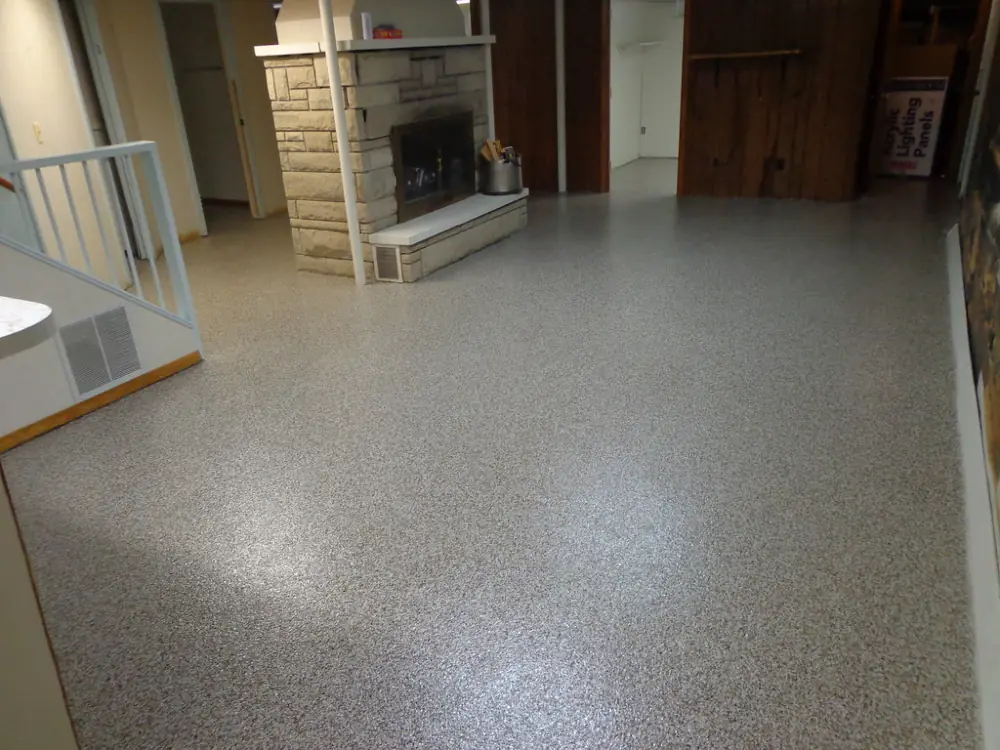
Shops, pole barns and boat storage
Workshops and storage buildings take dropped tools, jack stands, fuel and oil. 100% solids epoxy builds a thick film with good chemical resistance. A quartz or heavy flake broadcast adds grip where floors get wet or oily.
Boat storage and service areas get trailer tires and fuel spills, plus water off the hulls. Ask for a slip-resistant finish and a topcoat rated for the chemicals you use.
Pole barns often have slabs poured without a vapor barrier underneath. That is worth a moisture test before coating.
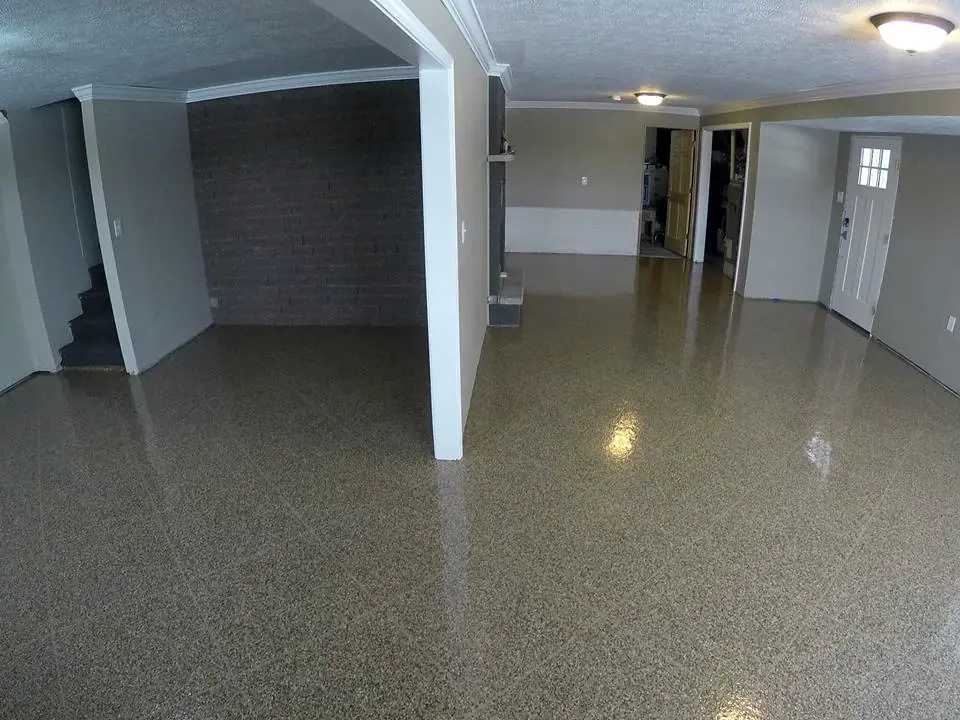
Flake in a basement
Hides dust and grit, easy to mop.
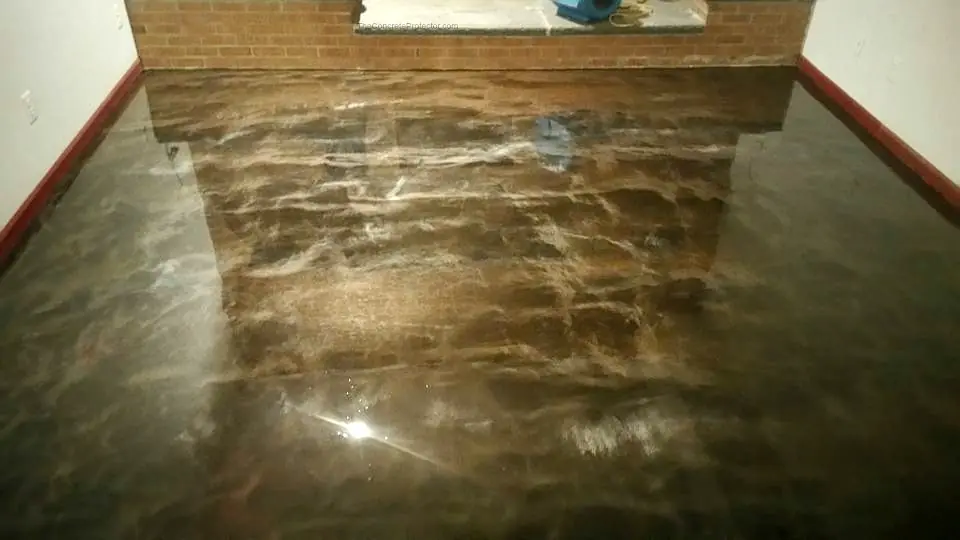
Metallic epoxy
A decorative look for finished lower levels and bars.
Get an indoor floor estimate
Tell us where the floor is, how you use it and what you have in mind. Start with a few details.
Questions people ask
Can you coat a basement that gets damp?
Not until the water problem is handled. A coating is not waterproofing. If the slab tests high for vapor but the room stays dry, a moisture-tolerant primer may work. Standing water or seepage needs a drainage fix first.
Is metallic epoxy durable?
Metallic epoxy is a decorative look, not a different chemistry. It is still epoxy underneath, often with a clear topcoat, so it wears like any epoxy system of the same thickness. It shows scratches more than flake.
Does epoxy smell during install?
Water-based and solvent-based products give off more odor than 100% solids epoxy, which has no solvent to evaporate. Ask which one is being used if anyone will be in the house.