Garage floor coatings
A flake system has a base coat, colored chips and a clear topcoat over ground concrete. The quote should also explain the concrete prep and repairs. Here is what the job usually includes and what to ask before you hire.
What a proper garage job includes
- Grind the slab. Diamond grinding opens the concrete so the coating can grip. Acid etching costs less, but it leaves a shallower, less even profile.
- Fix cracks and pits. Cracks get routed and filled. Control joints are either filled or cut back in after coating.
- Deal with oil and old coatings. Coatings don't bond over oil or failing sealers.
- Check moisture. Ask what moisture testing the proposed system requires and what happens if the readings are too high. Garages built into a hill are worth extra attention.
- Base coat, broadcast, topcoat. The base is often epoxy or a polyurea blend. Flakes go in wet. A clear polyaspartic or urethane topcoat seals it.
If a quote leaves out grinding or crack repair, ask why. Thin kits over etched concrete are the most common source of peeling and hot tire pickup.
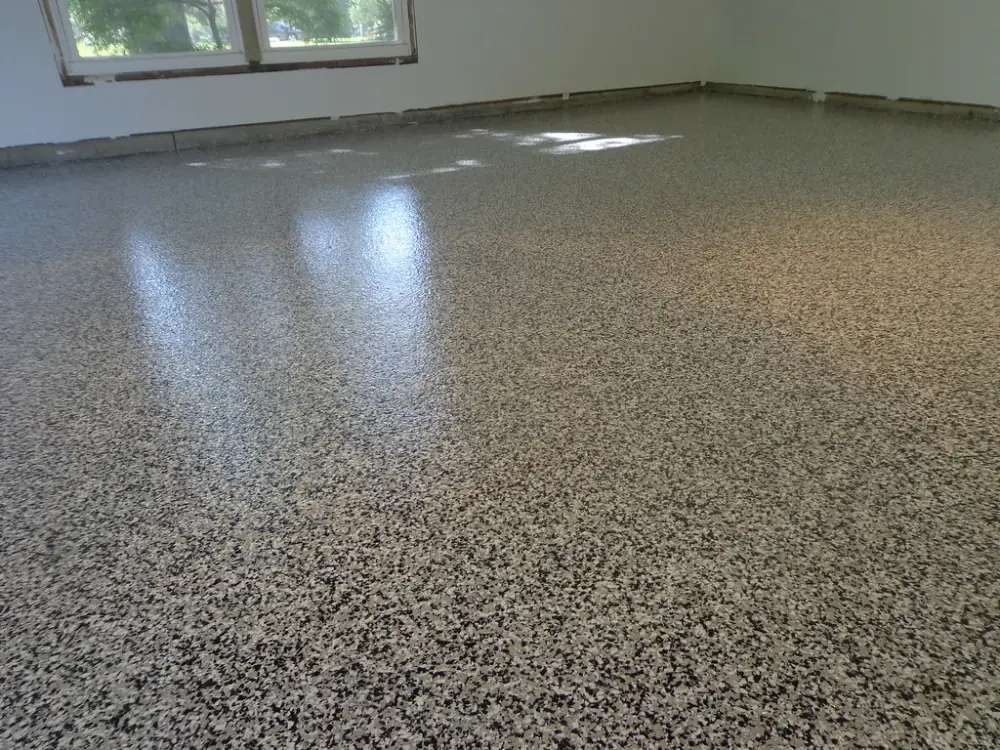
Finish options
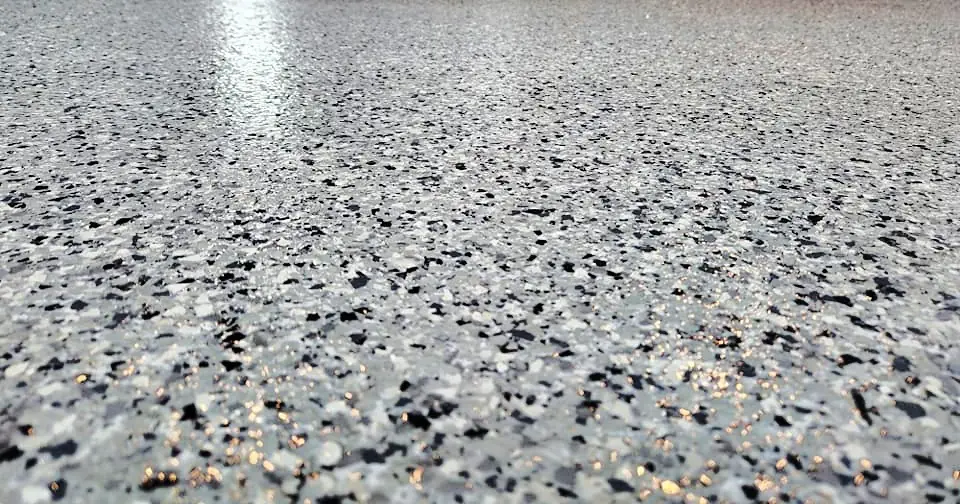
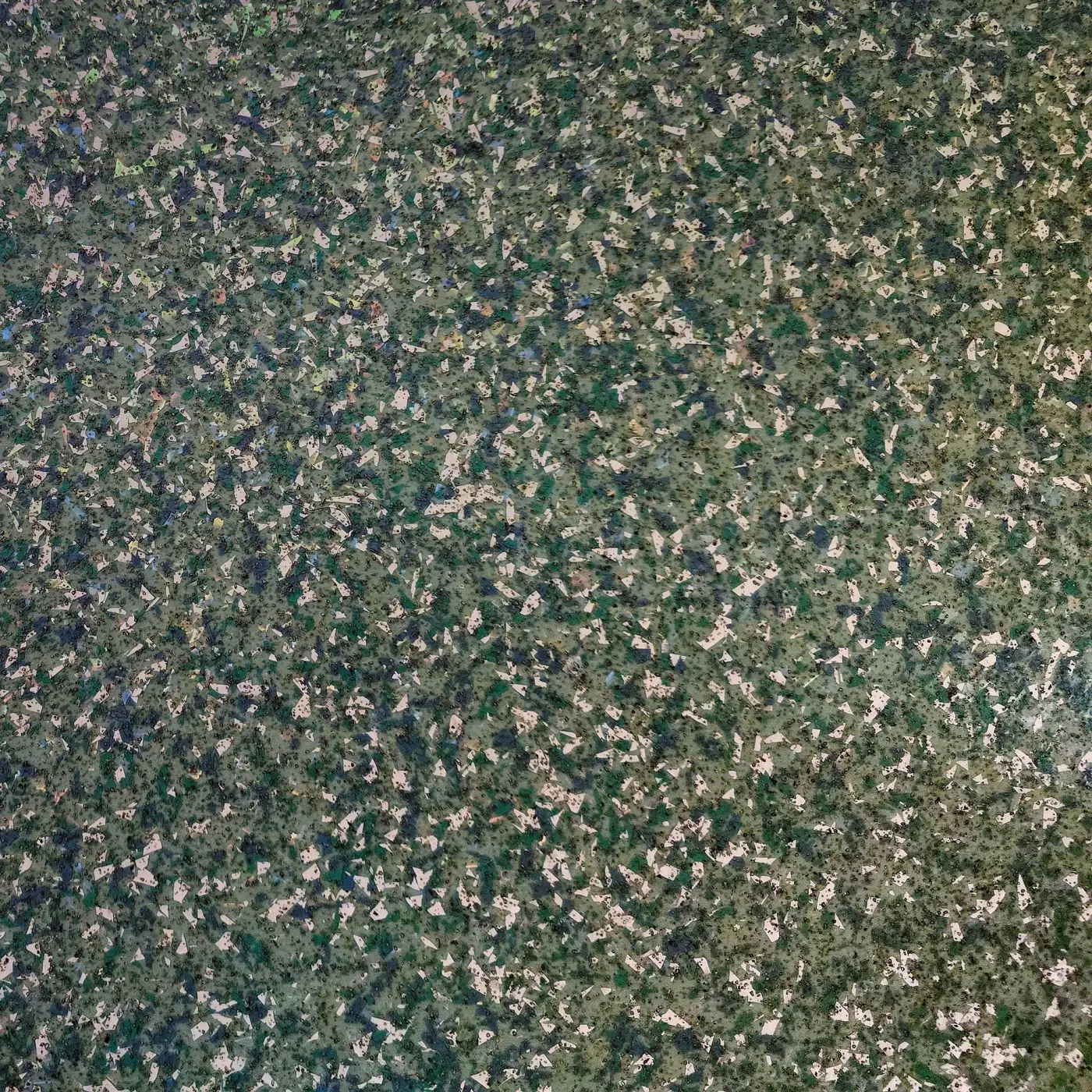
Full flake
Chips broadcast until no base shows. Hides dust and small flaws. Adds grip.
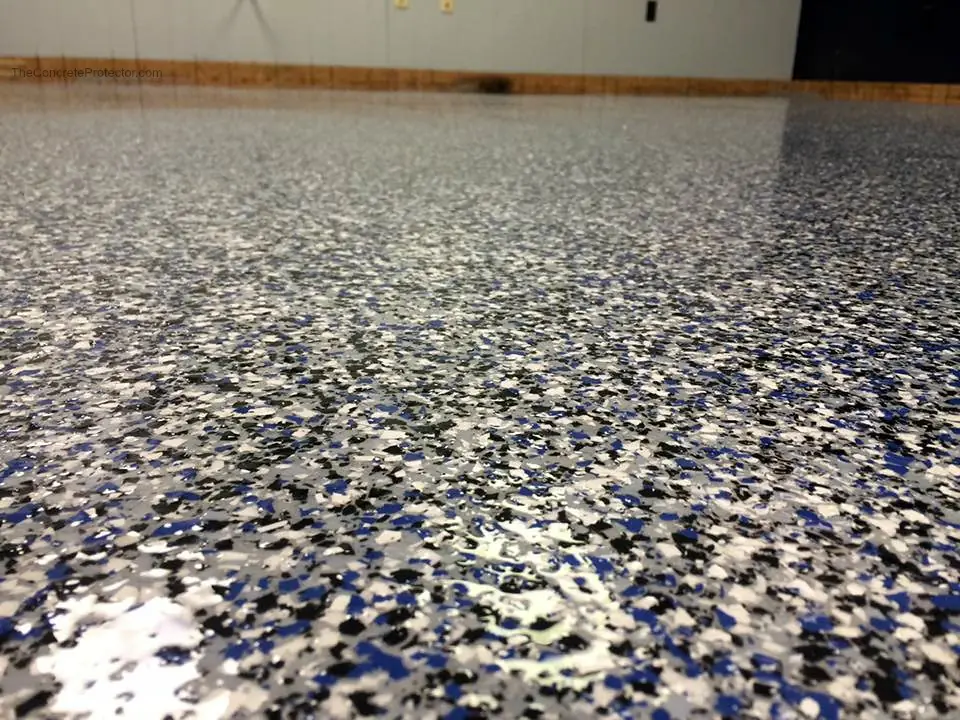
Flake blends
Same system in other colors. Contractors carry their own blend charts.
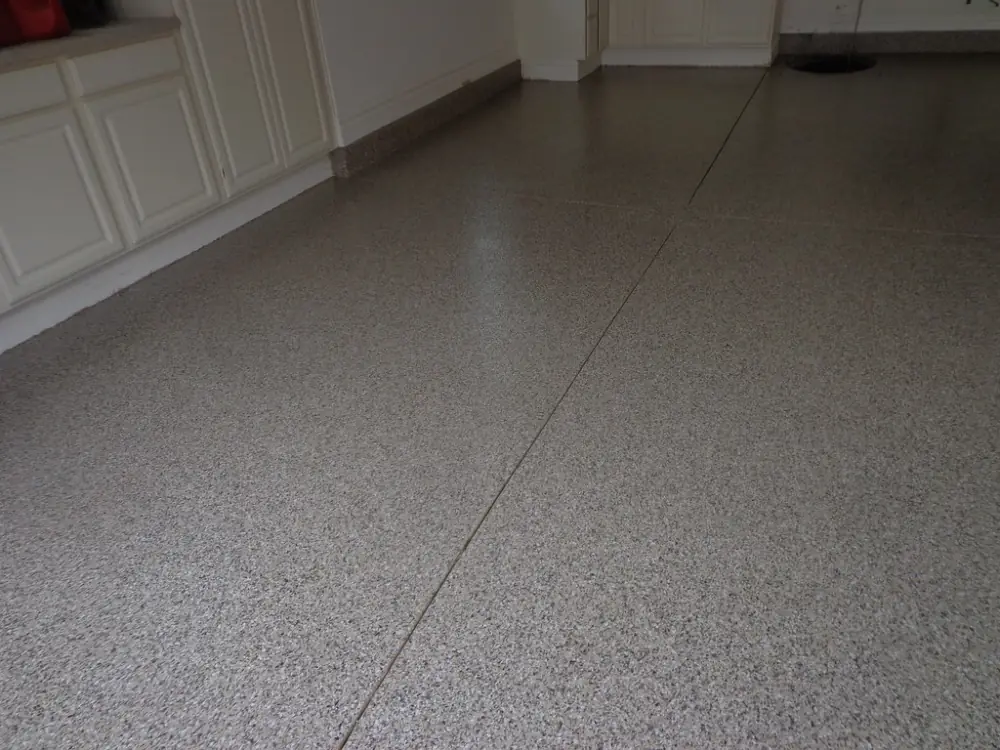
Quartz
Colored sand in epoxy. Thicker and rougher. Common in shops and commercial floors.
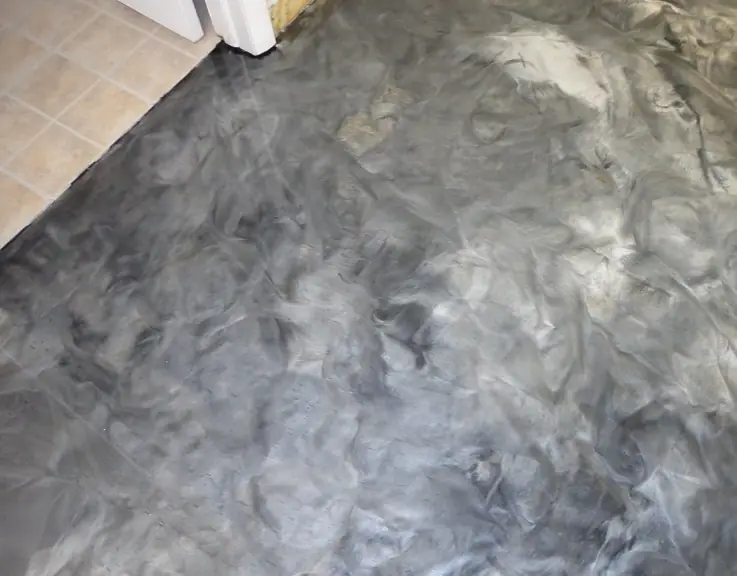
Metallic
Epoxy with metallic pigment worked into swirls. A decorative look; shows scratches more than flake.
Colors vary by product and installer. Ask the contractor for their blend chart.
Questions for any garage quote
- Will you diamond grind or shot blast? Acid etch?
- What base coat and topcoat products, by name? Can I see the data sheets?
- How do you handle cracks and control joints?
- Will you test for moisture? What happens if it's high?
- How long before I can walk on it, and park on it, at this time of year?
- What does the warranty cover, and does it exclude moisture or staining?
Read what the warranty covers, who provides it and which problems it excludes. Some installer warranties exclude moisture, hot-tire staining and chemical stains.
Compare epoxy, polyaspartic and polyurea · What moves the price
Get a garage floor estimate
Tell us where the floor is, how you use it and what you have in mind. Start with a few details.
Questions people ask
How soon can I park on it?
It depends on the product and the temperature. Published data sheets range from about 24 to 36 hours for some fast systems to several days for standard epoxy. Cold slabs cure slower. The contractor should give you the number for the exact product they use.
What is hot tire pickup?
Warm tires can soften a thin or poorly bonded coating and pull it off in tire-shaped patches. It is common with thin DIY kits over acid-etched concrete. Ground concrete and a thicker system with a polyaspartic or urethane topcoat resist it much better.
Will it be slippery?
A glossy coat can be slick when wet. Flake broadcast adds texture, and the topcoat can include a fine grit. If you walk in from the lake with wet feet, ask for it.
Can you coat over my old coating?
Usually not if it is peeling. Coatings don't bond to failing coatings or old sealers, so those get ground off first. A sound coating in good shape can sometimes be scuffed and recoated. The contractor has to see it.